


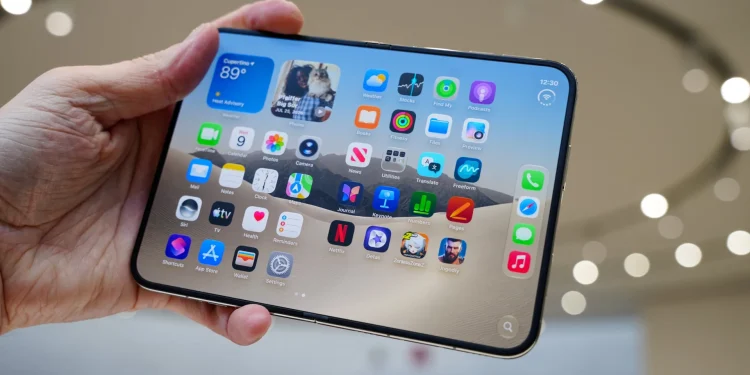
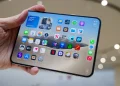
Apple’s iPhone Duo looks great at first glance and is undoubtedly one of the best foldable phones on the market. However, the $1999 price of this device is by no means cheap, and it can be more difficult to use compared to regular iPhones.
After using one of Samsung’s foldable phones for more than a year, PCMag senior software writer Chris Hoffman has come to the conclusion that, in practice, he has far fewer reasons to open his phone’s screen than he first thought. He believes that foldable phones aren’t necessarily for everyone, and that many users will probably be more comfortable with a regular iPhone in their day-to-day life.
The reality of using folding phones; Big, ugly and annoying
The iPhone Duo looks similar to Microsoft’s Surface Duo and is far from the traditional iPhone design. Although Hoffman has yet to hold the phone up close, based on the images he saw at Apple’s September event, he believes that holding it with one hand doesn’t seem very comfortable.
He expects the iPhone Duo, like the Samsung Galaxy Z Fold 6, to be less comfortable when closed. Unlike the iPhone Duo, the phone used by Hoffman has a slimmer body, but even in this model, the thickness of the device when closed is annoying for him.
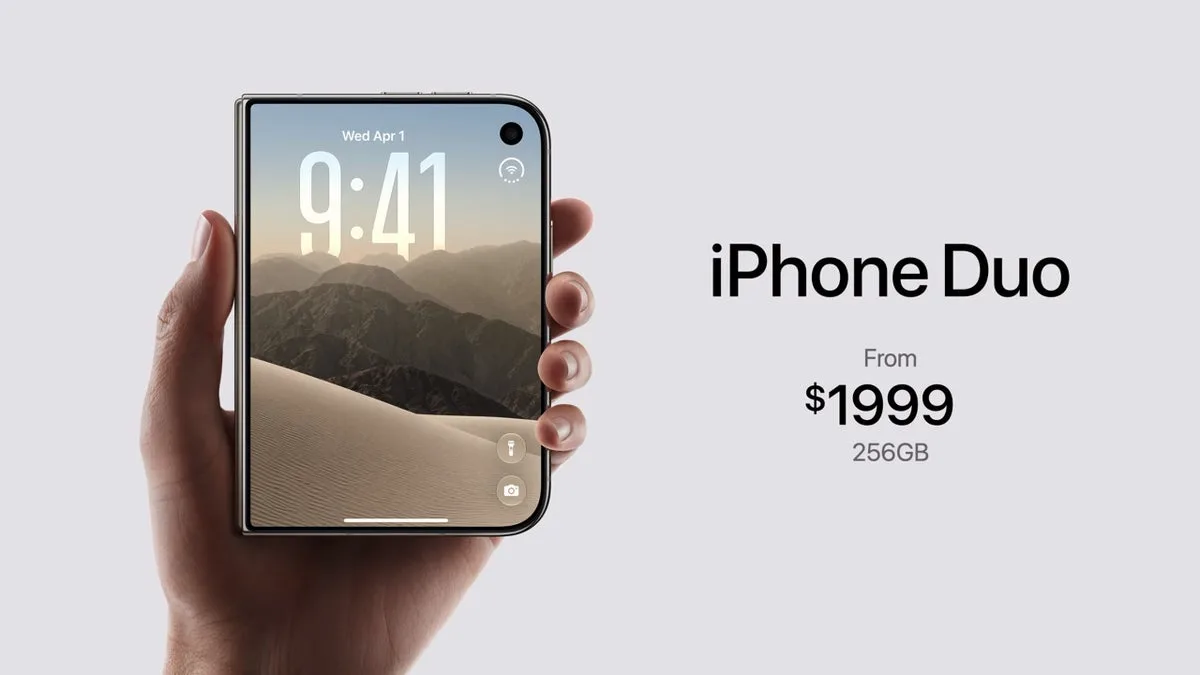
The bigger problem is that Hoffman is rarely inclined to open his phone screen and use it while walking down the street or standing in line. According to him, foldable phones are too delicate to safely use their large screen in such situations without worrying about getting damaged or falling.
Even when he is sitting and reading something in an app, he prefers to keep the phone closed so that he can quickly put it in his pocket without having to fold the screen again.
According to Hoffman, using a folding phone at home does not have much advantage; Because in such a situation, you can easily go to iPad or laptop and use a bigger screen.
Ultimately, the more time he spent using the Galaxy Z Fold 6, the more he found himself using the device just like a regular phone. As such, he faced all the hassles of a flip phone, without enjoying much of its main benefits.
multitasking with a folding phone; Two screens does not mean double the speed
Flip phones allow you to run two apps at once, but according to Hoffman, you have to ask how often users will actually need to run multiple apps on their phones at the same time.
He considers watching video while using other apps to be one of the attractive uses of multitasking, but he believes that the picture-in-picture feature found on iPhones addresses that need. According to him, multitasking might sound like a powerful feature on paper, but in practice it often only requires one app.
Another problem is that using two parts of the display at the same time is not necessarily a faster way to switch between applications. On an iPhone or a regular Android phone, you can switch between open apps very quickly. Conversely, placing an app on each side of the screen isn’t always the most efficient way to get things done.
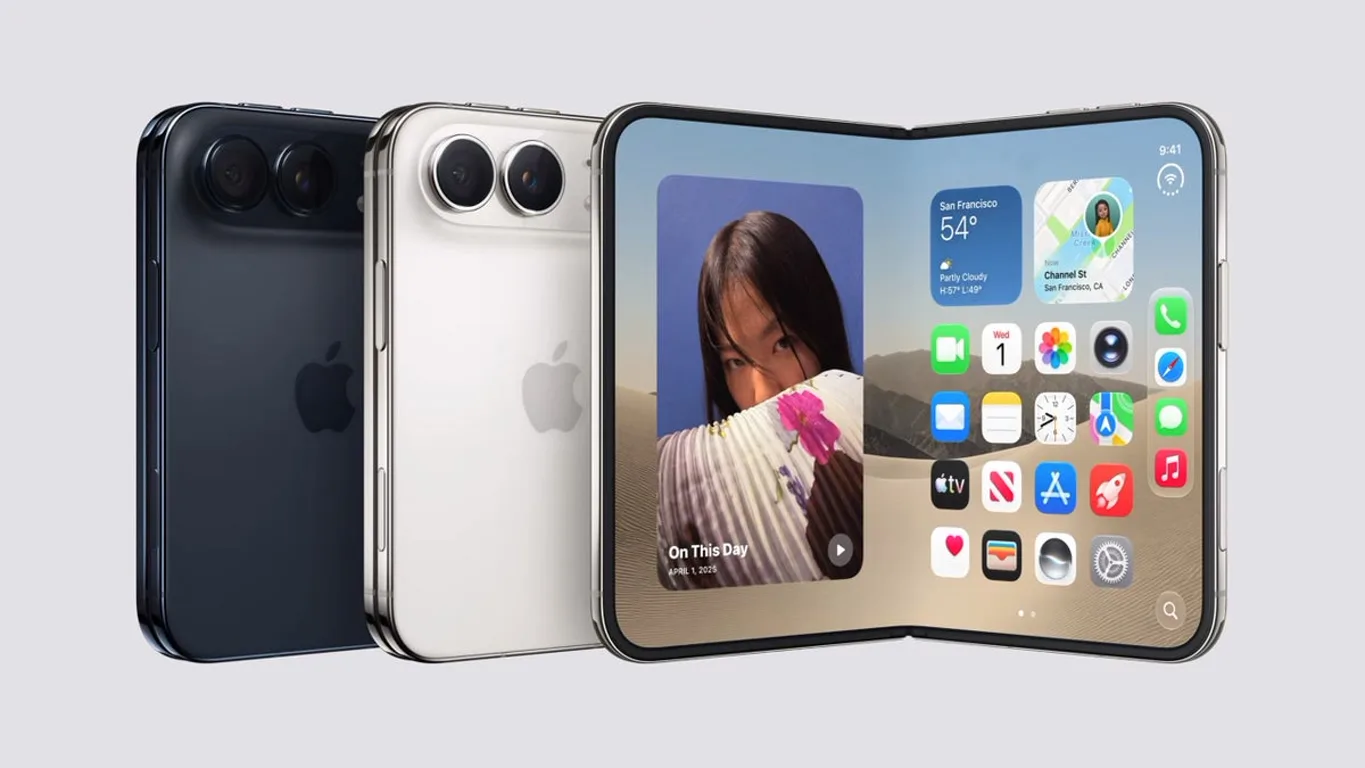
Hoffman expects Apple to provide a high-quality iPhone Duo software experience, but even the multitasking experience on the iPad is still not smooth and effortless in some situations. Therefore, simply having a bigger screen and being able to run multiple apps at the same time does not necessarily mean a better user experience.
Don’t be fooled by the hype; Flip phones are not for everyone
Hoffman has no doubt that some users will connect with Apple’s first foldable phone from the get-go. He also expects the iPhone Duo to become one of the most mature foldable phones on the market. However, this does not change the main fact: foldable phones are not the right choice for all users.
At the end of his article, Hoffman says that if he had to buy an iPhone, he would choose the iPhone 18 Pro, saving $800. He believes that the experience of using a folding phone taught him that regular phones are still more practical in the long run.
In fact, the attractiveness of technology and more features do not always mean a better experience. Flip phones may be impressive in terms of design and engineering, but if the user rarely uses their larger display, paying significantly more for these features doesn’t make much sense.
According to Hoffman, before buying a foldable phone, it is better to think about how often we will really need its special features in our daily life. It may turn out that a regular phone, despite having fewer features, is a more practical and cost-effective choice.









گفتگو در مورد این post