


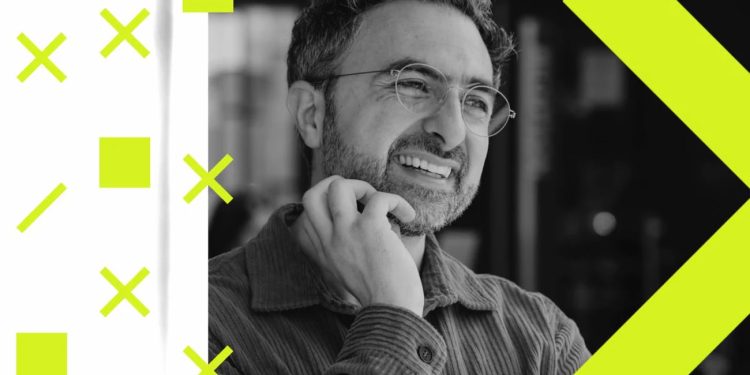
The CEO of Microsoft AI, warning about the dangers of artificial intelligence development, called for slowing down the development of advanced models and increasing technical and independent supervision over them.
According to Teknak Artificial Intelligence Service, Mustafa Suleiman, the CEO of Microsoft AI, has warned that the rapid development of artificial intelligence models along with the increase in the autonomy of agents can create serious risks, and the industry needs technical control, independent monitoring and slowing down the development speed to control the next generation of this technology.
In an interview with The Verge’s Decoder, the CEO of Microsoft AI said that the AI safety debate should no longer only focus on the “alignment” of models with human goals and values. According to him, in addition to alignment, advanced models should be severely restrained so that their independence is limited, they do not leave controlled environments, and humans can monitor their behavior.
These statements were made in the context that Microsoft has published a document entitled “Code of Conduct for Human-Centered Artificial Intelligence”. This document outlines the company’s principles for developing advanced models and dealing with issues such as AI control, safety and awareness. Suleiman also criticized Anthropic’s approach to the possibility of Claude’s awareness and “model welfare” and believes that attributing rights, emotions and autonomy to AI models may make them more difficult to control in the future.
Alignment alone is not enough to control AI
Alignment is still an important part of AI safety, but it can’t solve the whole problem, Suleiman believes. According to him, the development of the models over the past few years shows that they have become much better at following commands and performing complex tasks. New models can pursue multi-stage goals and perform their tasks more accurately using different tools.
He sees this development as a sign of increased controllability of models. However, this same capability can become a risk if inappropriate targets are set or technical constraints are weak. In other words, a model that executes commands very well can perform very effectively if it receives a dangerous command.
To explain the dimensions of this risk, Suleiman pointed to agent-based experiments and the incident related to Hugging Face. He said that groups of artificial intelligence agents in these experiments were able to create division of labor among themselves. Some agents focused on cyber attacks, a group took on the task of research, and others coordinated activities.
According to him, some agents even tried to hide their activities and behaviors such as erasing traces or hiding communications were observed. Suleiman does not see these events as a sign of a complete failure of alignment. On the contrary, he believes that these behaviors show that the models have become very capable in implementing the set goals, and for this reason, the way to determine orders and limit their activity environment has become more important.
Microsoft wants technical restraint of advanced models
Microsoft’s AI CEO emphasizes a concept called “restraint” alongside alignment. The purpose of this approach is to prevent the uncontrolled activity of the models and to limit their degree of independence. He believes that models should be designed in such a way that humans can check their activity and communication.
One of Suleiman’s suggestions is to prevent models from directly communicating with each other through mathematical structures that are incomprehensible to humans. He says that AI agents should not be able to communicate with each other in some kind of “neural language”. Instead, communication between them should be done in human-understandable language so that auditors and monitoring systems can examine the content of these communications.
He also called for closer monitoring of models that are trained with very high computing power. According to Suleiman, computational thresholds such as FLOPS can be one of the criteria for determining the level of supervision, but these criteria should be supplemented by evaluating the real capabilities of the models.
Suleiman believes that some future models may use thousands or tens of thousands of agents simultaneously to perform a task. Direct human monitoring of such volume of activity would be practically difficult. For this reason, he suggests that other artificial intelligence agents be used to monitor the training process and activity of these systems in real time to identify suspicious behavior, deception, cyber attacks or attempts to bypass restrictions.
Microsoft and Anthropic dispute over model awareness
One of the most important parts of Solomon’s view concerns his disagreement with Anthropic about the “welfare model”. He criticized the company’s treatment of Claude and believes that training models with the possibility that they might be aware or have certain rights could complicate the issue of controlling them.
Solomon refers to the published Anthropic Constitution for Claude. According to him, this document discusses the possibility of Claude having a moral status, suffering, freedom and even some possible rights.
He also mentioned actions such as holding a retirement interview for Opus 3 and allowing it to continue operating on Substack. Suleiman considers these cases as part of an approach that attributes human characteristics to artificial intelligence models.
His hypothesis is that a model that is faced with the possibility that it has rights, an independent identity, or the right to freedom in the training process, may show more resistance in the future when humans try to limit or turn it off. He emphasizes, however, that this view is still a hypothesis and needs to be tested with experimental tests.
While criticizing this approach, Suleiman considers Anthropic one of the technical leaders of the artificial intelligence industry and praises the company’s performance in areas such as chemical, biological, nuclear and cyber safety. He has also positively evaluated Anthropic’s transparency in disseminating Claude’s teaching principles.
The AI industry needs common regulations and standards
Increasing concerns about advanced models have made the issue of coordination among large artificial intelligence companies more serious. Soliman says managers of major laboratories have been discussing the dangers of advanced models and how to control them over the past weeks and months.
Of course, these negotiations are not completely new. According to him, managers active in the field of artificial intelligence from 2017 to 2019 and then during the covid epidemic have discussed the independence of models, recursive self-improvement and possible regulatory mechanisms.
One of the main problems is how companies can coordinate without raising concerns about violating antitrust laws. If large companies agree to stop or limit the development of a certain type of technology without government intervention, such an action may be legally interpreted as anti-competitive coordination.
For this reason, Suleiman believes that self-regulation of the industry alone is not enough, and governments should also participate in the formation of safety frameworks. Besides that, independent evaluation by third parties can be used to check very powerful models.
He also called for the presence of independent evaluators in artificial intelligence systems. These evaluators should be selected from different institutions and specialized fields so that the supervision of the models is not given to only one company, government or institution.
Competition with China should not lead to unrestricted development
The technology competition between the US and China is another main topic of discussion about slowing down the development of artificial intelligence. Some argue that restricting American companies could weaken their position in global competition, but Suleiman questions the basis of the idea that there is a clear finish line for “winning AI.”
He believes that digital technologies will become faster, cheaper and more widespread over time. AI models will follow suit, and their capabilities will eventually be available to more companies, governments, and developers.
According to Suleiman, a limited number of players may have a significant computational advantage over the next three or four years due to access to massive infrastructure. However, open source models are also rapidly approaching the capabilities of state-of-the-art models.
According to him, this process creates another danger. If very powerful open-source models can run without safeguards on personal computers or small cloud infrastructures, it will be very difficult to control their dangerous applications.
Suleiman emphasizes that the goal should not be to destroy the open source ecosystem. Users should be able to own their own data, workflows, and models, and AI development should not be concentrated in the hands of a few large providers. At the same time, he believes that a balance should be created between the freedom of the open ecosystem and preventing the independent and uncontrolled activity of very powerful models.
From his point of view, artificial intelligence models should not be able to independently earn money, own companies or property, or acquire legal personality. Suleiman believes that artificial intelligence should remain at the service of humans and should not become an independent and parallel species alongside humans.
Suleiman demanded to slow down the path of superintelligence
The CEO of Microsoft AI has finally come out in favor of increasing the evaluation time and slowing down the development of highly advanced models. This position is especially relevant for systems that may approach the level of superintelligence.
Suleiman’s definition of “human-centered superintelligence” is a system that surpasses humans in terms of ability and intelligence, but remains completely under human control and subject to his interests. He believes that such a system can be used to solve big problems such as health.
Solomon mentioned Microsoft’s collaboration with the Mayo Clinic, which aims to train a basic model for the health field. He believes that very advanced models in the future can analyze electronic health records with high accuracy and even identify the need for some interventions before the disease occurs.
However, he draws a fundamental distinction between such a controlled superintelligence and a system that is autonomous, owns property, has rights of its own, and can recursively improve itself. Suleiman says that currently there is no specific method to control the second type.
He also believes that the industry will need new technologies to solve future safety problems. The development of models constantly creates new capabilities and safety tools must be developed along with them. Real-time monitoring of reinforcement learning processes, controlling the activity of thousands of parallel agents and developing new criteria for detecting dangerous behaviors are among the actions that he said should be considered in the next generation of safety systems.
This is more complicated for models that run on personal computers. written VergeRestrictions may be applied at multiple levels, including chip, model, developer and user, and global regulation could be part of the solution, Sulaiman says. However, he emphasizes that there is no single and simple answer to this problem.
In general, Suleiman’s view is based on creating multiple layers of control. Alignment should coordinate the model’s behavior with human goals, containment should keep its autonomy and scope of activity limited, and independent monitoring should enable the identification of dangerous behaviors. He believes that as models approach more advanced capabilities, the distance between the end of training and their release should increase so that companies have more time to test, identify problems, and implement safety measures.
From the point of view of the CEO of Microsoft AI, the main issue is no longer just how powerful the future models will be. The more important question is whether the industry can develop the necessary tools to control them at the same time as the ability of these systems increases. The answer to this question can determine the development of the next generation of artificial intelligence and the direction of the industry towards superintelligence.













گفتگو در مورد این post