


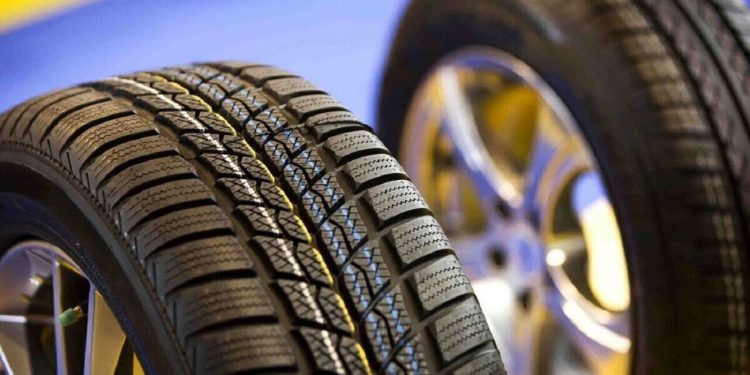
Iranian Economy: The details of the specialized judicial meeting with senior executive officials and the urgent order to correct the media pricing were disclosed.
Iranian economy:
Ali Salehi, Public and Revolutionary Prosecutor of Tehran, along with a group of managers of the Ministries of Industry, Mining, Trade and Energy, officials of the National Company for Refining and Distribution of Petroleum Products and representatives of banks, visited different departments of Iran Tire Company.
During this visit, which took place following the emphasis of the judiciary on supporting production, protecting employment and removing obstacles to economic activities, the prosecutor of Tehran, while attending the production lines and talking with managers, officials and employees of the company, was closely informed about the production capacities, the activity process of the complex and the problems and obstacles facing it.
In the following, a specialized meeting was held with the presence of managers of Iran Tire Company, activists of the country’s rubber industry, and officials of executive and banking institutions, and issues such as supply and allocation of currency, working capital, import of required equipment, supply of raw materials, energy imbalance, pricing and distribution of products, and court cases related to this production unit were discussed.
During this meeting, the prosecutor of Tehran personally followed up on the issue of providing foreign currency needed by Iran Tire Company by making a phone call with the deputies and managers of the central bank, and emphasizing the strategic position of tires in providing the public needs and welfare of the citizens, he ordered that the problem be investigated with urgency and resolved within three days at the latest.
Emphasizing the necessity of practical support for the production sector, Salehi stated: the judicial system, in the implementation of the policies announced by the Judiciary Department and within the framework of the resistance economy policies, considers the support of production and economic activists to be one of its basic priorities, and in necessary cases, by effectively entering and following up on obstacles, it provides the basis for solving the problems of production units.
Banking and judicial follow-up to remove obstacles to the company’s activity
Based on the approvals of this meeting, it was decided that the issue of securing the company’s working capital should be followed up with the cooperation of commercial banks, the city and relevant managers, and the results of the actions should be announced to Iran Tire Company and Tehran Prosecutor’s Office.
It was also decided that the legal case related to this production unit will be followed by the deputy of Tehran Prosecutor’s Office until the legal result is obtained.
In the pricing section, the necessity of adopting a balanced and documentation-based approach was emphasized. Based on this, the production companies, while maintaining the production level and avoiding price increases, will provide a detailed analysis of the costs and related documents to the trustees so that the prices are determined in such a way that while respecting the rights of the consumers and preventing the imposition of unusual pressure on them, the continuation of the production and the economic activity of the producers will not face unusual losses.
Revival of closed and semi-closed units; A necessity to reduce dependence on imports
Referring to the neglected capacities of the country’s rubber industry, the prosecutor of Tehran stated: four important and long-standing units of this industry are closed or semi-closed; While the activity of these units can play an effective role in increasing production, meeting domestic needs and maintaining and developing employment. The closure of such capacities is a serious loss and it is necessary for the relevant authorities to identify these units and their activity obstacles in the first step and provide the basis for their return to the production cycle by following up immediately and using legal and executive capacities.
He added: Considering the share of imports in meeting the country’s need for tires for light and heavy vehicles, activating existing capacities and increasing domestic production can be effective in reducing dependence on foreign exchange, managing foreign exchange expenses and providing stable market needs.
Salehi stated: Importing goods such as rubber, in addition to the need to allocate foreign currency, increases the country’s dependence on foreign sources. Meanwhile, by removing the obstacles of active units and reviving closed and semi-closed units, it is possible to increase domestic production capacity and contribute to the prosperity of production and employment. Therefore, supporting the units with capacity and serious pursuit for the return of the stopped units to the production cycle should be pursued simultaneously.
Targeted provision of raw materials and prevention of diversion and smuggling
In another part of this meeting, the prosecutor of Tehran, referring to the problems related to the supply of raw materials by the groups related to the distribution and refining companies, emphasized the necessity of accurate needs assessment and appropriate to the capacity of each production unit.
He stated: The amount of raw materials needed by each unit should be specified and provided based on the actual need and production capacity, and along with that, effective monitoring of the consumption of raw materials should be done to prevent their deviation from the production cycle and the possibility of smuggling.
The beginning of direct supply of tires and oil at an approved rate in Tehran from November 1
Referring to the joint program of the Ministry of Industry, Mines and Trade, the Governor’s Office and other responsible institutions to organize the tire and oil market, Salehi announced: The direct supply plan of these items at an approved rate in Tehran will begin on a trial basis from November 1, 1405.
He added: Monitoring the implementation of this plan is done with the participation of the Government Penalty Organization, relevant unions, the Ministry of Industry, Mining and Trade and the judicial system. It has also been decided that by installing notices and banners in supply and public information centers, citizens will be informed about the details of the plan and the scope of possible abuses and supply outside the rules will be reduced.
According to the explanations presented in this meeting, in the framework of the new plan, the direct supply of rubber and oil in Tehran is planned so that these items are available to consumers at an approved price without imposing unnecessary intermediary costs.
Convening a special meeting to organize the market and clarify the car price
Further, the prosecutor of Tehran, emphasizing the need for effective monitoring of the pricing process and increase in car prices, announced the need to hold a special meeting to investigate this issue.
He stated: In the field of automobiles, during the official correspondence with the Minister of Industry, Mines and Trade, the establishment of a system for more accurate monitoring and clarification of processes has been requested, so that while improving the possibility of monitoring, the rights of producers and consumers are taken into consideration.
Salehi added: This meeting is scheduled to be held during this week or at the beginning of next week, so that the necessary decisions are taken to organize the market and control the price increase.
Emphasis on increasing production and speeding up the transfer of goods needed by industries
Emphasizing the necessity of continuing the activities of industrial units, the Tehran prosecutor said to the producers: Production units should not reduce their production in the current situation, but should increase production by using existing capacities. On the other hand, the responsible institutions are also obliged to identify the existing obstacles and take action to eliminate them.
He also pointed to the need to speed up the transfer of goods needed by industries from domestic and foreign ports and announced: This issue will be followed up through the Ministry of Roads and Urban Development and Railways of the Islamic Republic of Iran so that the goods can be transported to their destination in the shortest possible time using rail and road transport capacities.
According to Salehi, speeding up the transfer of raw materials and goods needed by industrial units, in addition to preventing disruptions in the production process, can also be effective in regulating the market and controlling the costs and final prices of products.
Energy imbalance should not end at the cost of stopping production and threatening employment
In the final part of this meeting, the prosecutor of Tehran, referring to the problems caused by the energy imbalance in the industry sector, emphasized the need to adopt balanced measures to distribute restrictions and prevent the unbalanced imposition of the effects of energy shortage on production units.
He stated: The problems in the energy field should not be managed in such a way that the main burden falls on the producers; Because the production, employment and provision of the country’s basic needs depend on the continuity of industrial units. Any amount of damage caused by energy imbalance to the producers will be reduced, the ground for the prosperity of economic activities, the development of employment and the increase of the country’s production capacity will be provided.
Salehi added: The supply of energy needed by production units, especially in the field of electricity and gas, should be followed seriously so that these units face the least damage. If it is necessary to apply management restrictions, measures should be taken to maintain the continuity of production as much as possible; Because stopping production, in addition to threatening employment, disrupts the supply of domestic needs and increases dependence on imports.
Annual production capacity of 50,000 tons in Iran Tire; Employment of about 1,300 people
Hadi Amirshaghaqi, CEO of Iran Tire Company, also presented a report on the company’s capacities, production process, distribution network and development plans in this meeting.
Referring to the beginning of the production program of radial passenger car tires in this company about 20 years ago, he said: With the transfer of technical knowledge and the purchase of the required equipment, the production capacity of the company gradually increased; In such a way that the annual production amount, which was about 6 thousand tons in the early years of the establishment of this department, exceeded 30 thousand tons in 1403. About 75% of this production capacity is dedicated to radial tires and 25% to bias tires.
CEO of Iran Tire added: With the opening of the new phase of the company in Semnan province and the use of modern tire production equipment, the nominal capacity of the complex will reach 50,000 tons per year.
Referring to the 13% share of this company in the country’s tire market, Amir Shaghaghi said: Currently, about 1,300 people are working in the Tehran factory and the company’s head office, and the complex operates six days a week, during three eight-hour shifts.
He also announced the activity of 540 Iran Tire dealerships across the country and stated: In the first six months of 1405, about 23% of the total tires distributed by the company were supplied in Tehran province through 64 active dealerships in this province. The company’s policy is based on the balanced distribution of products throughout the country, according to the population of the provinces and the number of passenger cars.
Production and distribution of nearly 10,000 tons of tires in the first six months of this year
Referring to the production and distribution situation of the company in the first six months of 1405, the CEO of Iran Tire stated: the annual production of tires in the country is about 300 thousand tons, and in the first half of this year, Iran Tire produced about 10 thousand tons and distributed 9 thousand 990 tons; In this way, the difference between production and distribution in this period was only 10 tons.
He added: During this period, 987,831 tires were produced, of which more than 754,000 tires were sold through dealers. Also, 57 thousand 378 tire rings have been provided to consumers directly and at an approved price, and about 10 thousand rings have been delivered to institutions and organizations, mainly the country’s taxi association.
Amir Shaghaghi further, referring to the program of organizing direct supply centers for tires and oil in Tehran, said: within the framework of the new plan and with the planning of the Tehran Prosecutor’s Office, the direct supply of these goods will be developed with the aim of regulating the market and giving consumers access to products at an approved price. Based on this, from the beginning of November, the supply of these items is expected in around 300 locations in Tehran.
The CEO of Iran Tire added: Currently, 20 direct tire supply centers are active across the country and the company is pursuing the increase and organization of the network of dealers and direct supply centers with the aim of complying with the rates approved by the support organization and ensuring that consumers pay the legal price.









گفتگو در مورد این post