


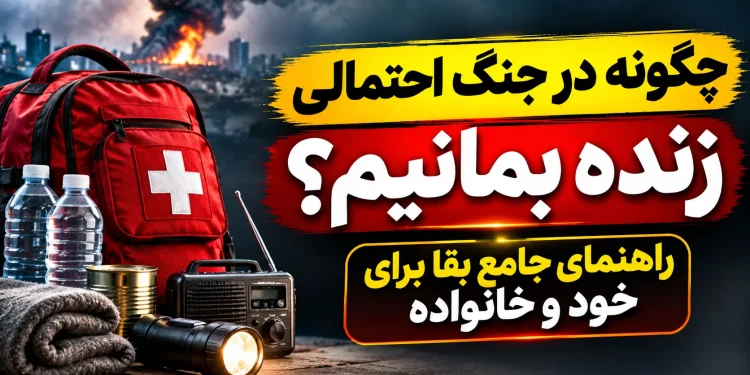

According to Zoom Tech from Wikihow, the importance of mental and physical preparation of citizens in the event of a possible military war: War is always considered one of the darkest parts of human history, and unfortunately, in the 21st century, different societies are still facing the risk of armed conflicts. When war breaks out, civilians are more vulnerable than any other group. Based on the experiences of international survival and personal defense experts, surviving in a war zone requires a combination of mental calmness, momentary vigilance, the ability to adapt to difficult conditions, and the knowledge of practical escape or shelter solutions. Whether the impending crisis is a limited local conflict, an all-out civil war, or a massive global war, taking preventive measures and calculated actions can determine the line between life and death.


The basic principles of survival in possible war conditions from the eyes of experts
Kai Forno, a leading wilderness survival expert and emergency author, emphasizes that successfully navigating military crises depends on coolness, avoidance of physical conflict, and high resilience to environmental changes. Before taking any hasty and emotional action, citizens should prioritize the following fundamental steps in their lives:
- Preparing an emergency backpack containing water, non-perishable food and water purification tablets
- Communicate regularly with family members, friends and neighbors to maintain a support network
- Follow official news through official government authorities and reliable news sources
- Staying in home safe shelters unless there is an opportunity to escape to a completely safe area
Maintaining effective communication with family and neighbors on the eve of conflict and possible war
In emergency situations, social networks and human connections are the most valuable assets of every person. Before the security situation becomes more critical, contact your relatives and those around you and ask for their basic needs. If the people around you need help to secure their residence, don’t hesitate to help. It is extremely important to create mental peace and reduce tension among the people around you; Because extreme worry and panic only destroys the ability to make the right decision. Survival in harsh conditions does not necessarily belong to the strongest, but the people who show the most adaptability to new conditions will have a higher chance of survival.
Introduction of experts and references of this guide
This guide is compiled based on the experiences of a group of the most experienced survival experts: Kai Forno is the author of 5 survival books and a guide to tough situations; Anthony Porter is a well-known crisis life skills coach; John Grayden is an expert in martial arts and urban self-defense scenarios; And Scott Thompson is a seasoned instructor of tactical and defense training to civil and law enforcement forces.
Avoid hoarding items and hasty purchases
Trying to accumulate goods is not always a smart move. There is a good chance that the crisis will end before it starts or you will be forced to evacuate the area immediately. Emptying store shelves only draws attention to you and makes you an obvious target for desperate people or thieves in a critical situation. Storage must be completely reasonable, appropriate to real needs and away from extreme behaviors.
Equipping rescue backpacks and escape essentials
Anthony Porter advises that a prepared backpack should always be available. This survival kit should include water disinfectant tablets, a complete first aid kit, warm clothing and extra socks, some cash, and long-lasting compressed food rations. In addition to these items, it is absolutely necessary to put a flashlight, hand-held or hand-held radios, multi-purpose tools, essential and chronic medicines, personal hygiene items, important identity documents and physical maps of the city and region in this bag.
Immediate identification of shelters during air raids
In modern warfare, air, drone, and missile threats far exceed those of infantry on the streets. Wherever you are, you should know the nearest parapet so that you can take shelter immediately when you hear the alarm. If you’re on the street and don’t have access to a subway station, get under sturdy canopies or building entrances, or lie on the ground next to cars and kiosks and cover your head and neck. If you are in a store or business center, stay away from the windows and go to the middle parts of the building or the restrooms. At home, the best place is the basement or bathroom and take shelter in the tub away from the glass. If you are driving inside the car, stop and take shelter on the floor of the car and avoid stopping under bridges.
Taking the warnings and instructions of official authorities seriously
History has shown that those who ignore evacuation warnings or safety recommendations suffer the most. War conditions are not a good time for conspiracy theories or ignoring passive defense orders. Take warning notices broadcast through public media, radio and emergency text messages seriously and follow government guidelines carefully.
Assessing the accuracy of information sources and dealing with rumors
During military conflicts, the spread of rumors and fake news reaches its highest level. Never take risky actions based on the unconfirmed statements of those around you. For information on the status of drinking water, open routes, possible attacks and conflict zones, rely only on the announcements of the police, the Red Crescent and official authorities, and constantly monitor local radio receivers.
Respecting the principle of saving yourself before helping others
Like the law of oxygen in airplanes, in crises you must first ensure the safety and health of yourself and your immediate dependents in order to be able to provide assistance to others. Making emotional sacrifices without planning can bring irreparable life risks.
Identifying the exit routes and international asylum
If the conflicts spread throughout the country, you should check the routes leading to the borders of neighboring countries that are open to civilians. It is necessary to carry a passport, valid identification documents and some small valuables that can be hidden and converted into cash to cross the borders. Communicating with friends and acquaintances living abroad can greatly speed up your rescue and settlement process.
Moving to safer areas away from the conflict lines
If your location turns into a battle zone, the best decision is to leave that location. Tactical instructor Scott Thompson notes that untrained citizens should not take risks to stay and fight. Rural areas, cities of no strategic military importance, and designated civilian shelters are much more suitable destinations for relocation; However, living in nature will require field survival skills.
Taking advantage of basic survival and rescue training
Before the outbreak of conflicts, short-term courses of first aid or survival training may be organized by the military or popular institutions. Learning these skills will improve your reaction time. Keeping a pragmatic spirit rather than wallowing in despair is the key to surviving turbulent times.
Selection of strong concrete and brick structures with basement
Multi-story brick and concrete buildings with strong walls have a high ability against explosive damage. Choosing a structure with a dark, solid basement can provide an excellent shelter. It should also be possible to quickly block openings using wet cloths to prevent the ingress of toxic gases or chemicals.
Construction of suitable parapets in forest and mountain areas
If you have to leave the city and settle in nature, the biggest risk will be climate change, cold and rain. Building an insulated shelter in a hidden and camouflaged place using natural features such as fallen trees is the first step after reaching remote areas.
Maximum avoidance of physical conflicts and tension with others
Survival for a civilian boils down to avoiding tensions. You should never engage in conflict with armed forces or desperate citizens. If you see enemy forces, hide and do not show aggressive behavior. Stealing or assaulting others only creates a cycle of violent retaliation.
Preparation for self-defense and familiarization with protective tools
Despite the emphasis on avoiding violence, it is necessary to be prepared to defend the life of the family. Keeping your defensive tools safe and out of the reach of children and learning how to use them without attracting the attention of others will help you deal with bandits and aggressors. Training all family members to use these devices will strengthen collective safety.
Decisive response in unavoidable life threatening scenarios
If the invasion of your privacy is certain and the lives of your loved ones are at risk of death, according to John Grayden, an expert in self-defense scenarios, you should stand up to the aggressors with all your might and with the help of the network of neighbors to get out of danger.
Learning medical first aid and treating injuries
Getting injured in a critical situation is inevitable. Immediate washing of wounds with only clean water and regular dressings prevent the occurrence of deadly infections. Collecting medical items and antibiotics should be placed in the treatment priorities.
A definite distance from unexploded ammunition and weapons
Bombs, mines, and mortar shells continue to kill civilians years after the end of the war. Never touch abandoned military equipment, shrapnel, and unidentified metal tools on streets and agricultural fields.
Personal hygiene to prevent epidemics
Contagious diseases can be more deadly than weapons in the conditions of urban infrastructure destruction. Using collected rainwater and soap for bathing and keeping the body clean helps to maintain the defense power of the organism.
Treatment and boiling of all questionable drinking water
Microbial contamination of water is a deadly danger. Porter emphasizes that all well, river or rain water should be boiled for at least one minute and passed through clean cloth filters to neutralize pathogens before drinking.
Smart nutrition and strengthening the immune system
Consuming nutritious foods such as grains, local vegetables, legumes, nuts and fish helps maintain vitamins and minerals in the body. In case of lack of access to fresh food, using multivitamin supplements is a key solution to prevent physical weakness.
Obtaining news and relief routes from independent and reliable authorities
To receive medical and medical services, only trust the warnings of neutral groups, well-known aid organizations, and medical personnel, and do not be deceived by false information in cyberspace.
Management of assets, cash and protection of identity documents
With the banking network and electricity down, it is essential to have paper cash and coins. Hiding property documents, registry documents and financial assets in hidden parts of your residence will prevent the loss of your identity and capital.
Finding and harnessing sustainable sources of fresh water
Rivers, lakes and rainfall are vital sources to replace bottled water. Place clean containers in the yard or on the roof to store rainwater without wasting it.
Storing canned goods and cereals with low sodium
Using canned foods, dates, honey and dried fruits is the best option due to their high stability. Avoid excessive consumption of salty canned foods that cause excessive thirst and loss of water reserves.
The skill of catching, hunting and collecting native edible plants
Knowledge of trapping for small animals, fishing skills and hygienic cleaning of meat can compensate for the lack of protein. Also, it is necessary to study about edible plants and perform a skin and smell sensitivity test before eating them to prevent plant poisoning.
Avoid waste and recycle all available items
In times of war, nothing is thrown away; Scraps of old cloth for clothes, skin and bones of food for extract and rainwater for washing must all be recycled.
Critical decisions in the absence of necessities of life
In the conditions of severe famine and when the lives of family members are in definite threat, searching in evacuated commercial places and warehouses is inevitable; However, entering guarded areas is very dangerous and should be avoided.
Maintaining mental balance and avoiding despair in difficult days
Building close relationships with neighbors, supporting children and the elderly, making written plans for unforeseen events, and practicing anxiety control exercises will keep your mind ready to make rational decisions in the midst of chaos.













گفتگو در مورد این post