


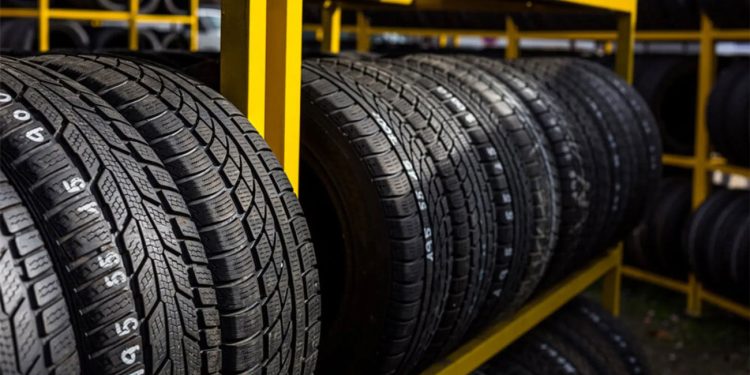
Iranian Economy: Two new policies in the field of pricing and distribution of tires have changed the market equations and now the perspective of prices and the cost of buying tires for drivers is in an aura of uncertainty.
Iranian economy:
In recent weeks, the car tire market has faced two important events; On the one hand, the policy maker has gone to direct and capillary distribution to control the price difference between the factory and the market, and on the other hand, the new decision of the market regulation headquarters to withdraw light car tires from mandated pricing has set a new path for producers and consumers. These two developments occur in a situation where the price of tires has increased in the past months and the cost of changing tires has become one of the significant costs of vehicle maintenance for households with cars.
The importance of these changes becomes more clear when we know that the tire market is not only facing the issue of pricing. The supply of raw materials, the dependence of part of production on imports, foreign exchange and transportation costs, the status of tire imports and the distribution network also play a role in the formation of the final price. Therefore, the decision to liberalize the price alone cannot guarantee a decrease in consumer prices; Similarly, the increase in supply without the continuous supply of raw materials does not necessarily lead to long-term stability of the market.
The car tire was removed from the mandatory pricing
The most important political development of the tire market in November is the decision of the market regulation headquarters to exclude light car tires from the mandated pricing until the end of the year. This decision was taken at the meeting on November 17, chaired by Mohammad Reza Aref, the first vice president, and its stated purpose was to support domestic production, increase production and adjust prices. This change is related to light car tires and it should not be extended to heavy car tires.
This decision has been taken in the situation where producers criticize the significant gap between factory and market prices. According to the head of the tire industry association, the difference between these two prices is currently between 60 and 100%; In other words, in some products, the price paid by the consumer in the market is far from the factory sales rate.
The head of the Tire Industry Association has also announced that with the withdrawal of tires from mandatory pricing and better access of factories to financial resources, the production of this product is expected to increase by 25% by the end of the year. According to him, with the implementation of this policy, the price gap between the factory and the market will also decrease. Of course, these figures are currently within the prediction and assessment of industry activists, and the realization of a 25% increase in production depends on the supply of raw materials, financial resources, and the continuity of factories.
In fact, the new policy pursues two goals; First, reduce the limitation of producers in determining the price and second, increase the motivation of production through the improvement of financial resources. However, the final outcome of this policy depends on how the factories behave and the conditions of competition in the market. If factory price increases occur faster than supply growth, some of the cost of liberalization may be passed on to the consumer. On the other hand, if the increase in production and supply is accompanied by a decrease in the price gap between the factory and the market, it will be possible to limit the activities of intermediaries and bring prices closer to the real transaction rate.
100% difference between factory and market; At what price is the tire sold?
One of the most important signs of disorder in the tire market is the gap between the factory sale price and the exchange rate in the open market. The announcement of a difference of 60-100% by the head of the tire industry association shows that in some products, the cost that the consumer pays for the purchase is many times higher than the amount received by the manufacturer. This distance can be the result of limited supply, multi-layer distribution network, side costs and the formation of intermediary demand.
To check the price situation in the consumer market, the list published on November 20 of 37 models of domestically produced tires is significant. According to this list, the price of each pair of Iranian tires starts from about 11 million 500 thousand Tomans and in some models it reaches 23 million 800 thousand Tomans. These figures depend on the tire brand, size and model and cannot be considered as a single rate for all tires in the country.
In this context, among the reviewed products, a rubber sample with a price of about 11,500,000 Tomans for two rings is in the lowest range of this list. On the other hand, another pair of tires is priced at around 23,800,000 Tomans.
This price difference is not only related to the name of the manufacturer; Tire dimensions, technical specifications, tread design and type of use also affect the price. For this reason, comparing the prices of two tires regardless of their size and specifications cannot provide an accurate picture of the market situation.
The effect of these prices on household expenses becomes clearer when the cost of buying four rings is calculated. According to the same list, buying four rings from the cheapest reviewed models costs about 23 million Tomans and buying four rings from the most expensive model costs about 47,600,000 Tomans. These amounts are only the price of the tire and do not include the cost of installation, balance and ancillary services. In this way, even buying domestically produced tires has become a cost of tens of millions of tomans for some car owners.
Capillary distribution lowered the price of rubber
Along with the new pricing decision, the government and trade unions have gone to change the supply network to control the market. The direct distribution plan of tires and engine oil at the factory price started in Tehran at the beginning of November. According to the explanation of the Chairman of the Tire and Oil Commission of the Chamber of Trades of Iran, in the first stage, this project was supposed to be implemented on a trial basis in 300 locations in Tehran.
In this mechanism, rubber is supplied from domestic manufacturing factories and is provided to licensed stores with the cooperation of cooperatives and trade unions. The supply price is also calculated based on the factory set rate for each brand and size. About three percent is considered for the cost of distribution and delivery services.
The importance of this plan is that the policymaker has tried to eliminate a part of the intermediaries between the producer and the seller and deliver the goods to the consumer with a limited distribution cost. The experience of the first weeks of the implementation of the project also indicates a reduction in the price of some products.
According to a report published on November 11, the price of some tires decreased after the start of capillary distribution. According to the statement of the head of the Tire Sellers Union, the price of Pride tires went from about 11,200,000 tomans to 7,200,000 tomans, and the price of a popular size 14 sample went from 16,500,000 tomans to 9,800,000 tomans. These figures are related to the samples announced in the report and should not be generalized to all brands and sizes.
This price reduction shows that the distribution network and the way sellers access the goods can affect the market price. However, the main issue is the continuity of supply. If the factories cannot provide their products to the distribution network in a regular manner, the initial effect of the plan may be lost and the gap between the factory price and the market may increase again.
Rubber production under the pressure of supply of raw materials and foreign exchange costs
Along with the pricing and distribution policies, the production situation is one of the variables that determine the future of the tire market. Although most of the tires used by passenger cars are produced domestically, this does not mean that the tire industry is completely independent from imports. Part of the raw materials needed by factories are supplied from abroad, and this issue makes manufacturers vulnerable to exchange rate changes and disruptions in foreign trade.
Jamal Mirzaei, CEO of Barz Industrial Group, announced on 1st of September 1405 that the country’s tire industry produces about 300,000 tons of tires every year. According to him, between 35 and 40 percent of the raw materials needed by this industry are imported, and about 100,000 to 120,000 tons of raw materials worth more than 300 million euros are imported into the country every year.
These figures show that even in the presence of domestic production capacity, the continuity of factories depends on the regular supply of raw materials. Therefore, any disruption in import, currency transfer or cargo transportation can increase the cost of production and if it is prolonged, it can also affect the amount of supply.
On the other hand, an increase in production costs does not necessarily mean an immediate increase in selling price. Factories may absorb some of the cost growth in their profit margins for a while, but the continuation of this situation could limit their financial ability to purchase raw materials, working capital and maintain production capacity. For this reason, the promise of a 25% increase in production should be evaluated alongside the actual supply of raw materials and financial resources of the factories.
import of rubber in recession; Domestic production alone is enough?
In the import sector, the market conditions are also limited. Mustafa Tannah, the spokesman of the Tire Trade Union, has announced in a conversation about the import situation that the majority of the country’s tire imports were made from China in the past years, but in the current situation, due to foreign exchange problems and foreign trade issues, the import of this product has almost stagnated and its volume has decreased drastically.
He also said that in the past years, the amount of imports was such that there are still stocks of tires in the warehouses, and in terms of the overall inventory, the market is not facing a widespread shortage. However, the decrease in imports this year can become one of the pressure factors on the market in case of an increase in demand or a disruption in domestic production.
These statements clarify an important point about the tire market: availability of goods in warehouses is not the same as consumer access to all sizes and brands needed. There may be tires in general on the market, but some popular sizes or specific products may be limited in supply. Therefore, to evaluate the market situation, a distinction must be made between total inventory, continuous supply, and actual buyer access.
He has also explained about the increase in prices that the tire industry did not increase prices from the beginning of the year until the beginning of the war, and after that, a 30% increase was applied at one stage. According to his explanation, the price of passenger tires has increased by 30% compared to last year. At the same time, he said that at the time of this conversation, there was no plan to increase the price again, although the producers believed that the current prices were not in line with the cost of production, and negotiations with the support organization were ongoing.
On the one hand, these statements indicate the cost pressure on producers and on the other hand, they indicate the limitation of the purchasing power of consumers. In such a situation, a price increase for factories can be a way to compensate for costs, but for households it will mean an increase in the cost of car maintenance.
What effect does the liberalization of tire prices have on drivers’ expenses?
The decision to withdraw light car tires from mandatory pricing is now considered the most important market policy variable in the coming weeks. Supporters of this decision believe that pricing restrictions can reduce the incentive to produce and increase the gap between the official price and the market. From this point of view, price liberalization along with improving factories’ access to financial resources can increase supply and take the market out of the current situation.
However, the outcome of this policy depends on how it is implemented. If producers impose new prices without a commensurate increase in supply, cost pressure is likely to be passed on to buyers. On the other hand, if the increase in financial resources leads to the supply of raw materials, increase in production capacity and regular supply, it will be possible to reduce the price gap between the factory and the market.
Meanwhile, capillary distribution experience is also important. The price reduction of some products after the direct entry of the goods into the sales network showed that the modification of the distribution route can help to adjust the prices in the short term even without changing the production capacity. But this experience reaches a sustainable result when the direct supply is not limited to a one-time action and the stores have continuous access to the goods.
Another issue is the difference between light and heavy vehicle tires. The new decision of the market regulation headquarters is related to light car tires, and the previous mechanism for heavy tires is still in place. Therefore, the analysis of the effect of price liberalization should be focused on the passenger tire market and the situation of trucks, buses and commercial vehicles should not be considered the same.
The tire market is waiting for the results of two new policies
In November 1405, the car tire market is at a point where the result of two different policies can determine its direction; The first policy is the withdrawal of light car tires from mandatory pricing and the second policy is direct supply and reduction of middlemen in the distribution network. Both policies are pursued with the aim of improving market conditions, but their effectiveness depends on variables beyond the announcement of the decree.
On the one hand, producers have predicted a 25% increase in production by the end of the year, and on the other hand, published statistics indicate a 60-100% difference between factory and market prices. This gap shows that the issue of the market is not only the amount of production and the reform of the supply network is also important. The experience of price reduction of some products after capillary distribution also confirms this issue.
However, what matters to the consumer is not the factory’s advertised price or the promise of increased production, but the amount he ends up paying for the tire. When the purchase of four rings of Iranian tires for some cars reaches more than 47 million Tomans, even a partial reduction in the price gap between the factory and the market does not necessarily mean the return of the purchasing power of households.
Finally, the main test of the new policy will be determined in the remaining months of the year; Whether the price liberalization leads to a real increase in production and a reduction in the price gap, or whether the increase in production costs and restrictions on the import of raw materials neutralizes the effect of this policy. More than anything else, the rubber market needs continuous supply, price transparency, and consumer access to goods at an acceptable rate. Without fulfilling these three conditions, changing the pricing mechanism alone cannot solve the market problems.















گفتگو در مورد این post