


Among the technical and complex aspects of electronic warfare, perhaps the theory of radio frequency can be considered the most difficult part.
Since the advent of radio tracking and ranging, or radar, at the end of World War II, this technology has become an integral part of many daily life tools; From miniature millimeter-wave radar sensors in smart toilets to pulse-Doppler units that track the trajectory and speed of balls in professional sports.
This wide range of applications and diverse fields makes it difficult to determine the superiority among radars. The RT-70 (RT-70) radio telescope belonging to the former Soviet Union is undoubtedly an extremely powerful radar capable of detecting asteroids and communicating with deep space probes. However, such a system with a fixed bandwidth of 512 kHz and a cell resolution of about 300 meters would have no chance of achieving the fast update rates and high resolution required in modern air defense.
The same difference in targets is also seen in air combat radar systems. The missions and roles for which an aircraft is designed and optimized are directly reflected in the type and performance of its sensor array. A radar may be considered powerful for several reasons; Sometimes it gains power due to sending huge pulses, sometimes it offers high speed of action and the ability to intercept multiple targets in crowded air battles, and sometimes it has the ability to detect small targets from very far distances. In addition, the processing architecture and electronic warfare of a system can guarantee its power by making it possible to receive and send data in a wide network of sensors.
But what features make the radar of a fighter jet powerful? And which fighters best offer these features?
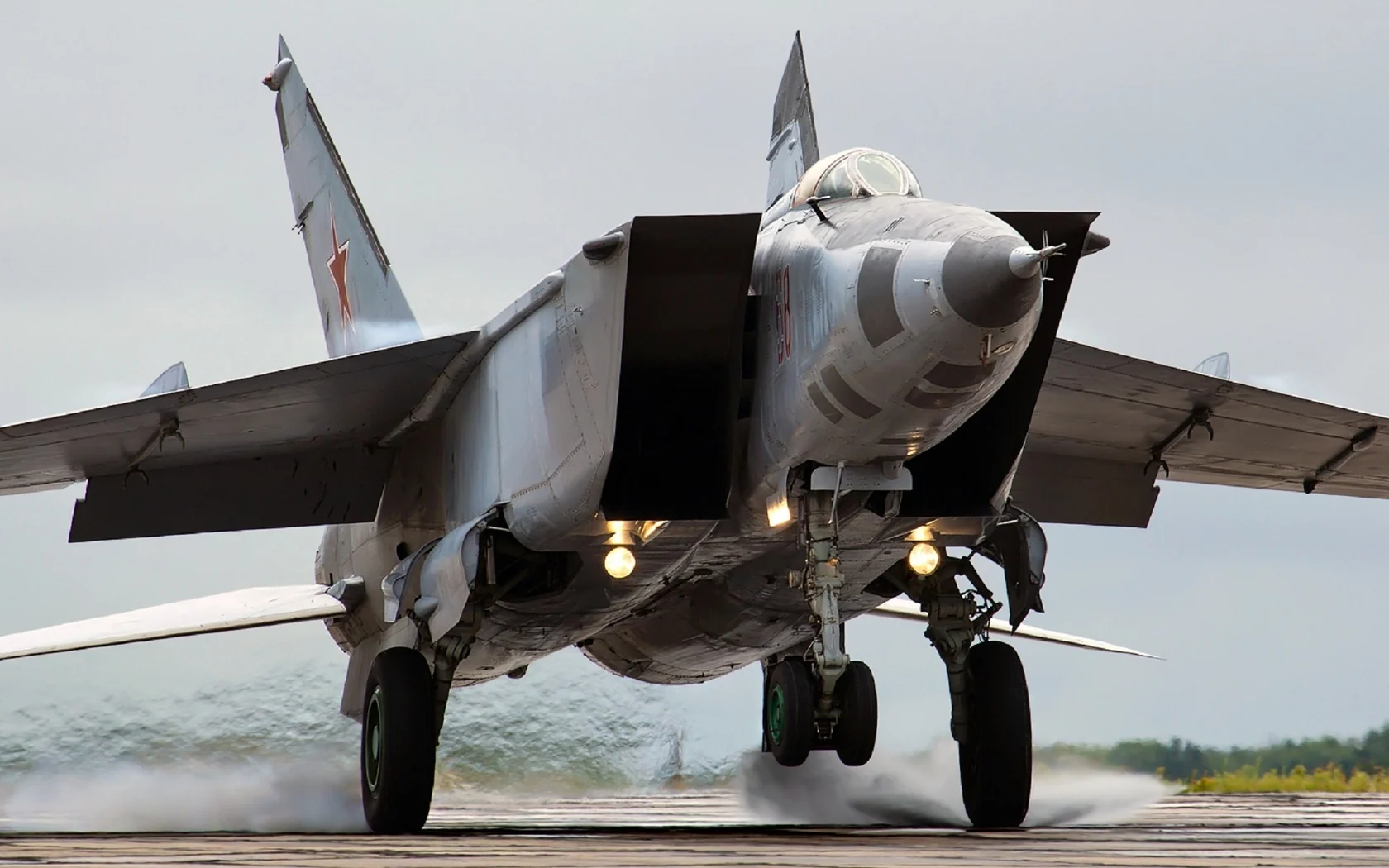
MiG-25 Foxbat: pure power and maximizing effective radiation power
If we consider the power of fighter radars in its literal sense, identifying the most powerful example will be a very simple task. Raw effective radiated power, known in technical information as “peak power”, refers to the maximum amount of instantaneous watts that can be injected into a radar pulse.
By this measure, no system even comes close to the RP-25 Smerch-A Fox Fire radar installed on the Russian MiG-25 Foxbat fighter. With a peak output power of about 600 kW, this radar recorded an amazing figure for an airborne system in the 1960s. Even compared to today’s 4th, 4.5, and 5th generation fighters whose output power varies between 20 and 40 kilowatts, the Foxbat is still considered an unrivaled giant, and there is a very valid reason for this.
The Foxbat was built to do one thing best: destroy bombers carrying nuclear weapons. During the early stages of the Cold War and the era of nuclear anxiety, American B-52 bombers were expected to approach Soviet airspace at high altitudes and equipped with multiple layers of electronic countermeasures. The extraordinary power output of the RP-25 gave the Foxbat two great advantages: a very long detection range and an extremely high “burn-through” range. The concept of jamming in electronic warfare refers to a certain distance at which the active radar signal becomes stronger than the enemy’s jamming noise and enables the target to be intercepted. Because radar waves are attenuated as they propagate through space, a weaker radar must be much closer to the target to achieve this capability.
In modern times, signal complexity and the need for stealth have replaced the demand for raw power. Despite this, the MiG-25 Foxbat remains a formidable force in electronic warfare, considering the characteristics of its time, the mission it was designed for, and the amount of raw power the RP-25 packs in one pulse.
Sukhoi Su-35 Flanker: effective detection performance against a variety of targets without limitations
One of the most common ways to evaluate the performance of a radar is to simply check its range of vision. This metric is not necessarily a bad approach, as it refers to various critical aspects of system performance, such as transmitter power, antenna gain, and maximum unambiguous range. However, the nature of the target is as important as the capabilities of the radar itself in the detection process. A large high-reflective bomber or a transport aircraft will be detected at much greater distances than a sleek, stealthy fighter. The amount of reflectivity of a target is known as “radar cross section” (RCS) and is expressed in square meters.
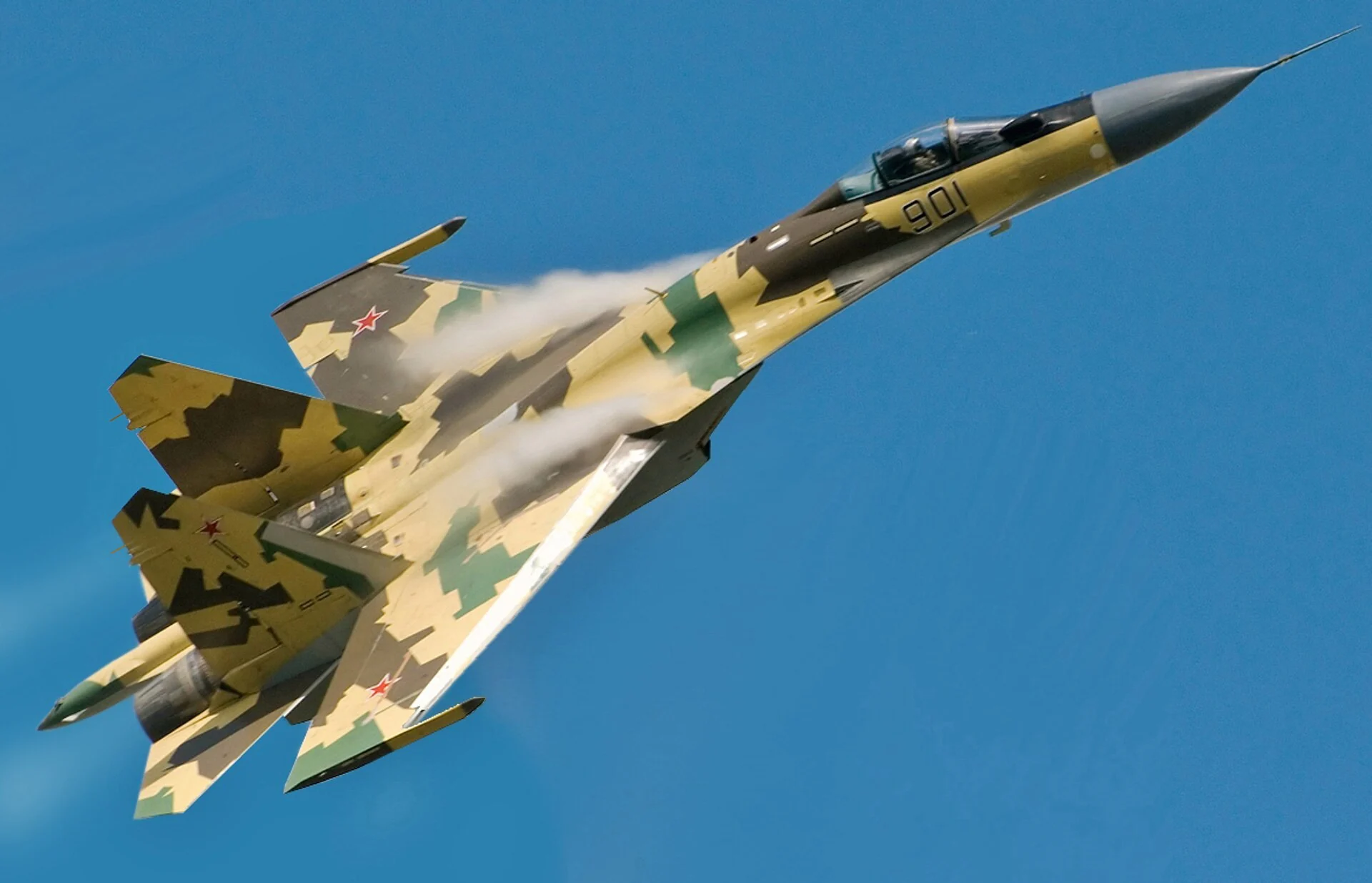
In aircraft designed to hunt and destroy large targets such as bombers, air battle space management platforms and refueling aircraft, radars can be optimized for longer wavelengths. These waves undergo less atmospheric absorption and quality loss over time and distance, but they still have the ability to detect larger radar cross-sections. These types of radars are usually installed on larger interceptor class jets, and in the meantime, few systems have the ability to compete with the N035 IRBIS-E radar used in the Sukhoi-35.
Sukhoi-35, with a declared detection range of up to 400 km for targets with a radar cross section of 3 square meters, is a perfect example of a large and heavy interceptor. Although this detection range is significantly reduced for targets with a smaller cross-sectional area (for example, the radar cross-section facing an F-16 is about one square meter), the Russian aircraft is still an excellent platform for mounting long-range or extended-range air-to-air missiles. These weapons allow the fighter to deliver lethal blows deep into the enemy’s airborne control systems and logistics sectors.
However, Airbus-E struggles with the limitation of closed field of view. This radar concentrates the receiver’s energy and workload into a pencil-thin beam, sacrificing wider environmental awareness.
Eurofighter Typhoon: antenna aperture and beam shaping capability
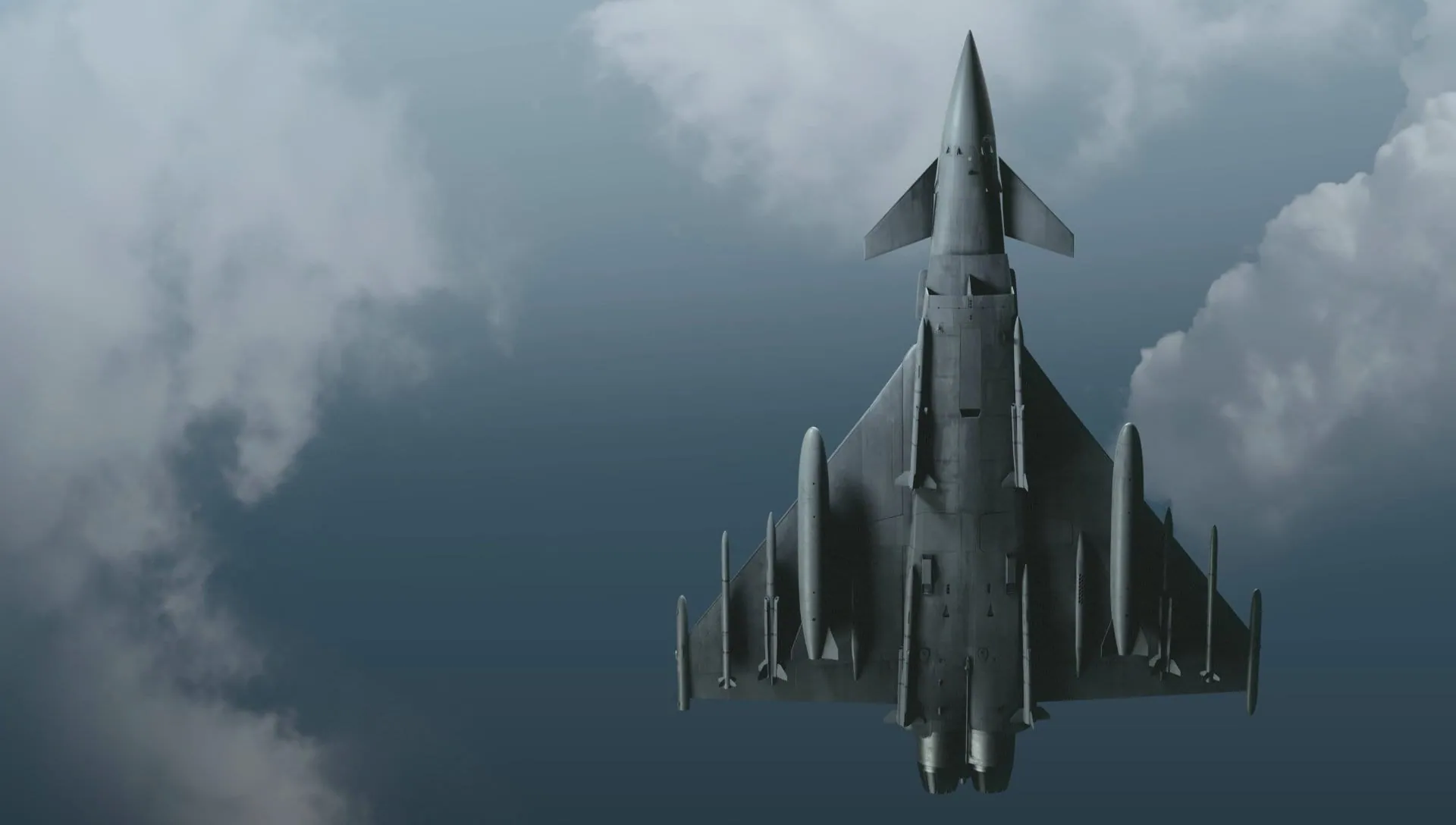
In contrast to the long-range lethality of interceptors, having a shorter but wider field of view along with the ability to quickly switch between search, intercept, and simultaneous-scan intercept (TWS) functions can provide a tremendous advantage for agile front-line fighters. This feature is especially important for fighters looking to exploit quick, short bursts in the late stages of beyond-visual-range (BVR) combat.
It can be said that few fighters do this better than the Captor-E ECRS Mk2 radar, which is supposed to be used in Tranche 3 versions of the Eurofighter Typhoon. While most aircraft choose either mechanical or active beam steering, this system combines both technologies. A mechanical position shifter moves the entire antenna array and completes its electronic beam steering. In total, this combination provides a field of view of 200 degrees in a detection range of about 200 km for the Typhoon.
This feature has a very high tactical value. It can be argued that the most critical point in air battles is the moment of the merger of fighters. The term refers to the point at which two aircraft of radar-guided weapons and beyond-field-of-view tactics enter the close-in-visual-range (WVR) or air-to-air combat phase. At this moment of intersection, the positioning or the way a fighter is placed in relation to the opposing aircraft becomes vitally important to gain the advantage in maneuvers. A radar like the ICRAS Mark 2 allows the Typhoon to gain the upper hand in the battle by adopting relatively complex angular and lateral positions while maintaining sensor lock on the target.
Ultimately, how powerful a radar is in air combat is as much a matter of geometry as it is a matter of watts or peak power. More energy would certainly be great, but shaping that energy to fit the aircraft’s combat style is critical.
F-22 Raptor (F-22 Raptor): detection range against specific type of targets
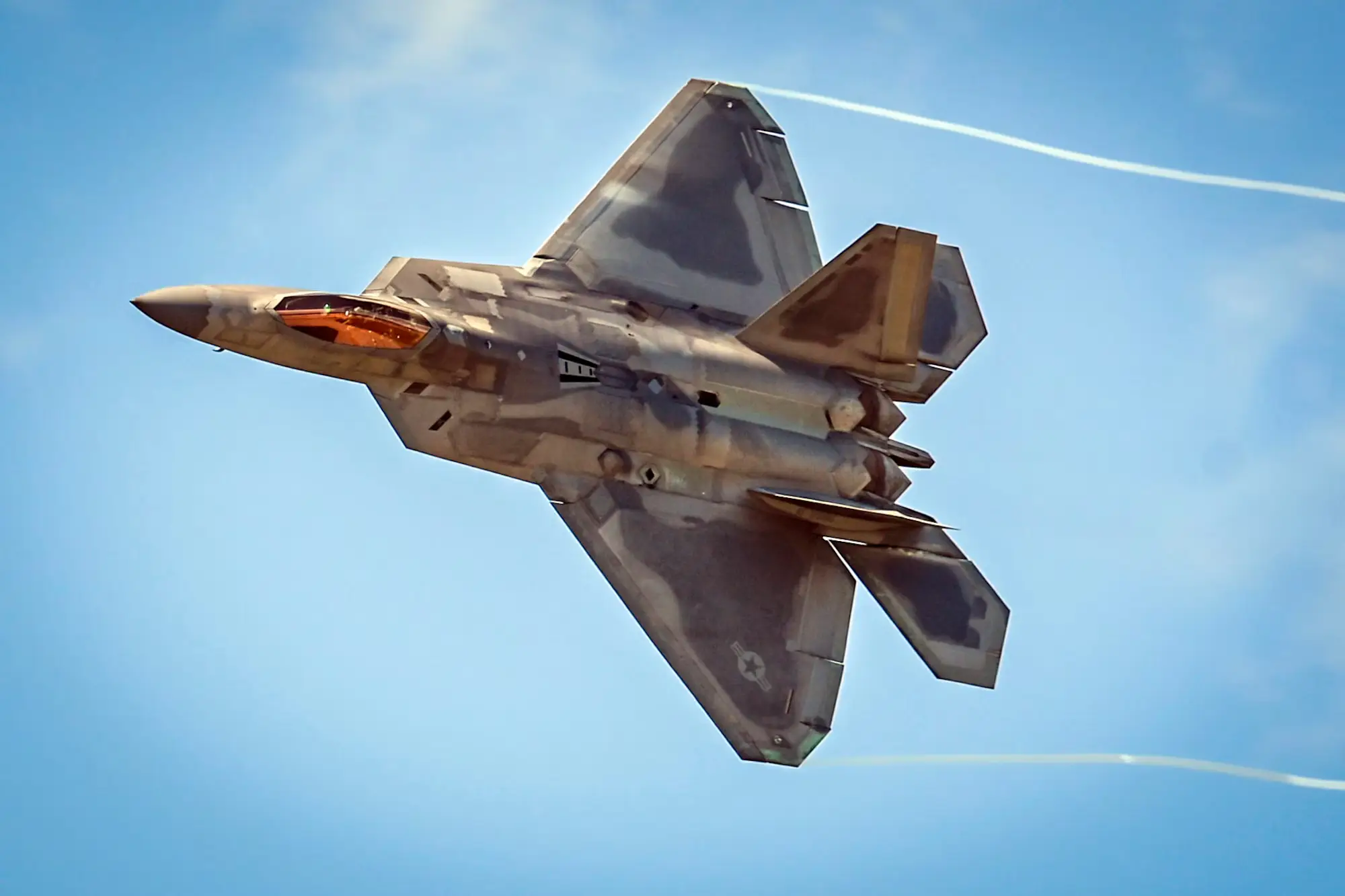
Working with radars requires accepting some compromises. The phenomenon of frequency resonance or Mie scattering refers to the tendency of objects to reflect radar waves more strongly when their dimensions match the wavelength, and this phenomenon will determine what kind of target a radar is most suitable for. Finding large aircraft with a high radar cross section is easy, but finding a polished fighter-sized target is much more difficult.
If the measure of a fighter jet’s radar strength is its ability to detect other fighters, the AN/APG-77 system installed on the F-22 Raptor would be the standard measure today. As the aircraft is a fifth-generation jet in service, its exact performance figures remain confidential; However, estimates from open sources show that its detection range against a target with a cross-sectional area of one square meter is about 200 km. But what makes the APG-77 system so powerful is its optimization for long-range detection and tracking of fighter-sized targets, which simultaneously minimizes the possibility of the system itself being detected.
The F-22 was developed as an air superiority fighter to combat aircraft capable of retaliating. Therefore, the APG-77 radar is designed to maximize superiority over other fighter jets. As in an exchange of fire, the bullet has a two-way function and can reveal the position of the shooter in addition to the target’s position; Radar waves also indicate the location of the enemy, but on the other hand, radar warning receivers (RWR) inform the enemy of your presence, interception or radar lock. The APG-77 system alleviates this problem by combining long-range detection of specific targets and low probability of interception (LPI) techniques.
Frequency agility, which means moving through different parts of the radio frequency spectrum, sometimes thousands of times per second, tricks enemy radar warning receivers into mistaking intercept waves as background noise. Also, radar power control systems calculate exactly the amount of energy needed to maintain lock to avoid bombarding the target with additional waves and exposing it to detection. These technologies give the Raptor the power to conduct surveillance without being seen and maintain the element of surprise when moving to intercept; A really smart hunter.
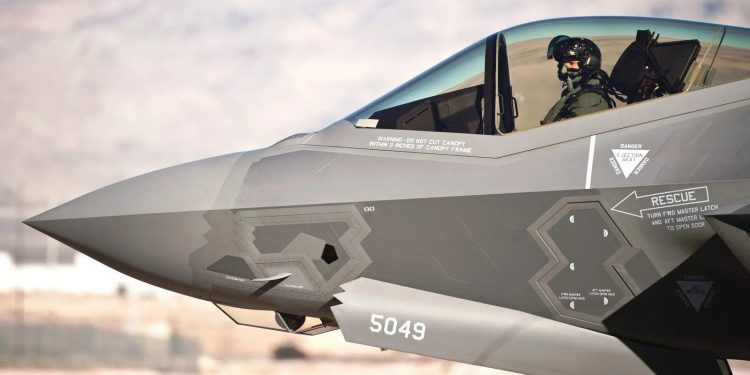
F-35 Lightning 2 (F-35 Lightning II): processing power, information quality and integration of sensors
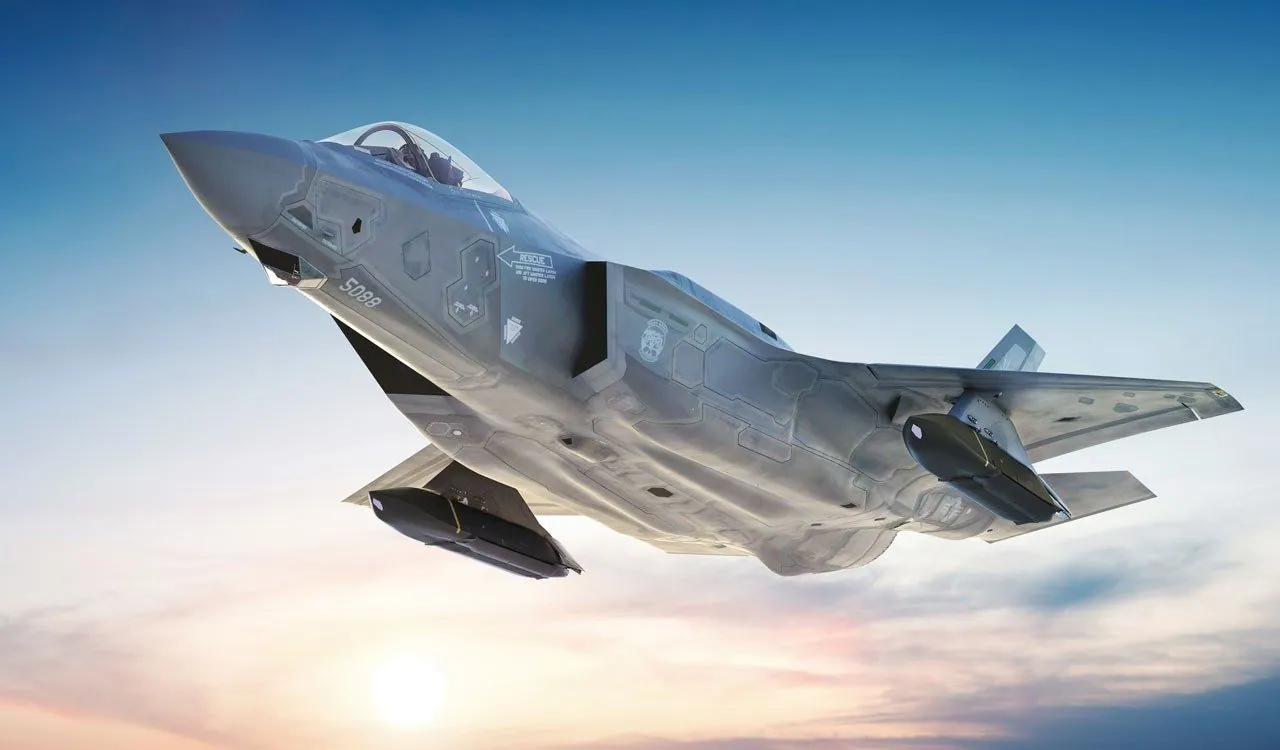
Today’s wars are based on networks. No platform operates in isolation; Rather, sensors are connected through data links to create a common and continuous flow of tactical information. This applies to all modern fighters. Whether the birds using the American Link-16 and 22 standards, or the systems equipped with Russian OSNOD or Chinese DTS-03, they all tap into a vast pool of network data. When this pool contains far more information than a single jet’s internal computer can receive or process, it can be argued that the most powerful fighter will be the one that can most effectively access and exploit this data lake.
In this context, F-35 Lightning 2 is considered a superior option. This advantage is not due to the built-in AN/APG-81 radar, but to the ability of this aircraft to integrate into much larger electronic warfare and sensor integration architectures.
Lightning 2 is designed to perform multipurpose air-to-air and air-to-ground missions. This will mean dealing with multi-domain threats and not just air threats, as well as engaging in electronic warfare or suppressing and destroying enemy air defenses. Unlike fighters built solely for air superiority, the Lightning 2 must operate in an increasingly complex electronic environment and maintain environmental awareness in a battle whose data management is beyond the capabilities of a single jet. So the answer seems simple: this bird connects to a network that has all the information it needs and even more.
The F-35 builds its operational picture using data from internal sensors as well as information received from other networks. So, although the APG-81 radar is an incredibly capable multi-purpose system, if we move the general question of the most powerful fighter radar beyond the physical arrays on the plane and consider any sensor array that the jet can receive data from; In this case, power becomes merely a synonym for processing capacity, and in this regard, no bird in the sky will be smarter than the F-35.
Review methodology
In order to identify the aircraft and radar systems that are recognized as the most powerful options in the field of modern air combat operations, five criteria were determined that address the linguistic and contextual concepts of power in radio frequency theory. These criteria are derived from basic linguistic definitions, common non-technical assumptions, as well as specific mission roles and requirements for modern warfighters.
To verify each aircraft’s position, we used specifications and performance capabilities provided by manufacturers and public sources, and all of this information was carefully reviewed for technical plausibility. Also, gaps or limitations of information access were covered using open source analysis of valid and verifiable data about aircraft operations.














گفتگو در مورد این post